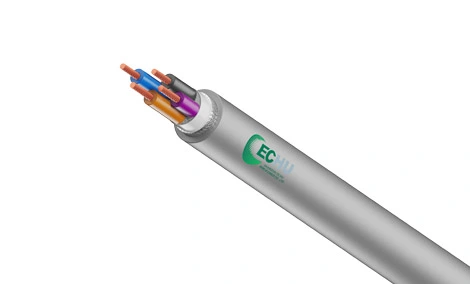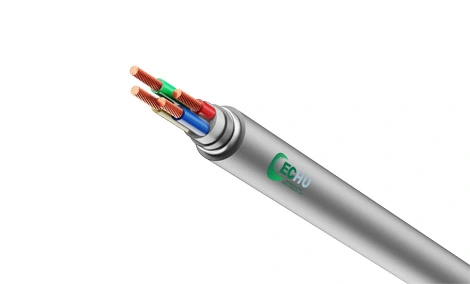

Automated terminals in 2026 rely on nonstop motion — RTGs, RMGs, STS cranes, stacker systems, and AGV charging lanes all demand power and control signals that survive millions of cycles. In this environment, a crane cable is not a commodity — it is a critical uptime component. The right crane electrical cable must handle constant reeling, high tensile loads, tight bend radii, abrasion, oil, UV, and salt fog without cracking, stretching, or signal loss. This guide explains what high-tensile reeling really requires and how to specify the correct cable for smart port automation.
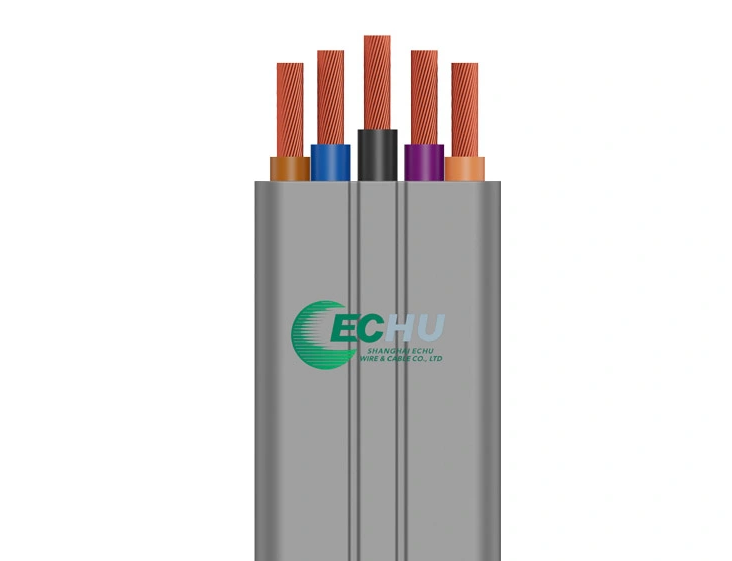
.png "/uploads/image/2026/05/07/crane cable(1).png")
Traditional ports operated with significant human intervention — crane operators managed movements manually, duty cycles were moderate, and maintenance windows were relatively predictable. Automated terminals operate differently:
| Operating Parameter | Traditional Port | Automated Terminal |
|---|---|---|
| Operating hours per day | 16–18 hours (shift-based) | 22–24 hours (near-continuous) |
| Acceleration profile | Operator-managed, moderate | VFD-controlled, fast and repeatable |
| Cycle count per year | Moderate | Millions of cycles on reeling cables |
| Fault response time | Operator can stop and wait | Automated systems flag cable faults as production stoppages |
| Application | Stress Mechanism | Primary Failure Risk |
|---|---|---|
| Reeling drum (RTG power supply) | Continuous wrap and unwrap; tensile load under full travel | Conductor fatigue; insulation cracking at bend points |
| Festoon system | Repeated draping and extension over long horizontal runs | Abrasion at contact points; jacket wear |
| Energy chain (cable chain) | Repeated bending through defined radius at high cycle rate | Inner conductor fatigue from torsion and bending |
| Trolley and boom travel | Long travel distance at speed with acceleration shock | Tensile stress at termination points |
A cable failure on a busy automated terminal does not just stop one crane — it can halt an entire berth or terminal zone. Emergency cable replacement on a live port crane typically costs 5–10 times the planned maintenance cost, and the production loss during a multi-hour stoppage often exceeds the entire cable procurement cost for the application.
| Property | What It Controls | Design Element |
|---|---|---|
| Tensile strength | Maximum pulling load without conductor elongation or damage | Reinforced jacket; strain-relief elements; correct conductor cross-section |
| Elongation control | Prevents conductor stretching that changes resistance and causes shorts | Tight lay length; reinforcement fibers in some designs |
| Torsion behavior | Critical for vertical reeling where cable twists during travel | Torsion-balanced lay construction; center reinforcement element |
| Flex life | Number of bending cycles before insulation or conductor failure | Fine-wire stranding; flexible insulation compound; optimized lay |
Standard cables use relatively coarse conductor stranding. A crane electrical cable designed for continuous reeling uses fine-wire stranded conductors — sometimes ultra-fine stranding — which distributes bending stress across many small wires rather than concentrating it in fewer large ones.
The difference in flex life between a standard flexible cable and a purpose-designed reeling cable is typically 5 to 20 times at the same bend radius and load cycle.
The bend radius the cable experiences on a drum is determined by drum diameter and the number of winding layers. As cable winds onto a drum, outer layers bend at a larger effective radius than inner layers — but the cable also experiences increased radial pressure from the outer layers on top.
Minimum drum diameter for a given cable should be specified as a multiple of the cable outer diameter — typically 10–20 times the OD for reeling cables, depending on construction. Using a drum diameter below this minimum accelerates fatigue dramatically.
A port crane cable operates in one of the most aggressive environments in industrial use:
| Environmental Exposure | Source | Effect on Cable |
|---|---|---|
| Salt fog and spray | Marine atmosphere | Attacks outer jacket; corrodes exposed metal; degrades some polymers |
| UV radiation | Outdoor operation | Photo-oxidation of jacket compound; surface cracking |
| Diesel and oil | Crane machinery, ground contamination | Swelling and softening of standard PVC jackets |
| Abrasion and grit | Sand, concrete, cable tray edges | Surface wear through outer jacket; eventual insulation exposure |
| Temperature cycling | Day/night range; solar heating of dark cables | Repeated expansion and contraction stress on jacket and insulation |
| Jacket Material | Strengths | Limitation |
|---|---|---|
| Polyurethane (PUR) | Excellent abrasion resistance; good oil and UV resistance | More expensive than PVC |
| Chloroprene (CR) | Good oil and ozone resistance; flame retardant | Lower abrasion resistance than PUR |
| TPE compound | Flexible in cold; UV stable; good all-round | Varies by compound formulation |
| PVC (standard) | Low cost; widely available | Poor abrasion resistance; inadequate for aggressive port environments |
For outdoor port crane applications, polyurethane or chloroprene outer jackets are the standard recommendation. Standard PVC should be specified only for protected indoor crane applications.
Shielded constructions add cost and reduce flexibility slightly — but are required when:
Control and signal conductors run in the same cable as VFD power conductors
Encoder feedback signals must be protected from inverter switching noise
The application involves sensitive sensor signals in a high-EMI environment
On a moving crane system, every cable run through a reeling drum or energy chain represents a potential failure point. Combining power conductors, control conductors, and data pairs into a single hybrid crane cable:
Reduces the number of individual cable runs through reeling and festoon systems
Eliminates the need to synchronize multiple cables of different constructions and flex lives
Simplifies termination — one connection point rather than multiple
Reduces EMI risk from parallel power and signal cables running separately
| Signal Type | Protection Required | Construction Element |
|---|---|---|
| VFD motor power | High current; generates EMI | Heavy-duty power conductors; overall shielding |
| Encoder feedback | High-resolution; sensitive to noise | Individually shielded twisted pair |
| Control signals (digital) | Moderate EMI sensitivity | Twisted pair; collective screen |
| Analog 4–20 mA sensor signals | EMI-sensitive | Individually shielded pair; good grounding path |
Variable frequency drives generate significant high-frequency switching noise that travels along the cable. A crane electrical cable used with VFD drives must have:
Low capacitance construction to limit high-frequency current flow
Effective shielding with continuity of the shield connection at both ends
Symmetric power conductor arrangement to minimize unbalanced EMI radiation
Flexible insulation that maintains dielectric properties at the VFD switching frequency
| Parameter | What to Specify | Example |
|---|---|---|
| Voltage rating | System voltage — typically 0.6/1 kV for power | 0.6/1 kV |
| Conductor configuration | Number and cross-section of power conductors | 3 × 35 mm² + 2 × 1.5 mm² shielded pairs |
| Outer diameter limit | Maximum OD for the drum and energy chain geometry | Maximum 42 mm OD |
| Reeling type | Spring reeling, motorized drum, or festoon/energy chain | Motorized cable drum |
| Travel length | Maximum cable travel distance per cycle | 150 m |
| Travel speed | Maximum cable travel speed | 2.5 m/s |
| Drum diameter | Inside diameter of the reeling drum | 800 mm |
| Environment | Coastal, UV exposed, oil risk | Outdoor coastal — salt fog zone 1 |
| Control requirements | Shielded pairs for encoder, sensors, safety signals | 4 × shielded twisted pairs |
| Test | What It Confirms |
|---|---|
| Tensile strength test | Cable withstands rated tensile load without conductor elongation |
| Flex and bend cycle test | Defined number of cycles at rated bend radius without failure |
| Abrasion test | Jacket withstands specified abrasion cycles without breakthrough |
| Insulation resistance | Confirms insulation integrity after flex cycling |
| Salt fog test | Jacket resists salt fog exposure for defined hours |
| VFD compatibility test | Confirms acceptable capacitance and shielding effectiveness |
Confirm winding direction on the drum matches the cable lay direction — wrong direction accelerates fatigue
Use proper strain relief at all termination points — the cable jacket must not carry tensile load at the connector
Seal termination entries against moisture ingress — particularly critical in outdoor coastal installations
Establish an inspection schedule: visual check at defined cycle counts; insulation resistance test annually
Smart ports depend on reliable motion systems, and those systems depend on cables that survive constant reeling under harsh coastal conditions. Choosing the right crane cable — with the correct tensile design, flex-life construction, and environmental protection — directly reduces downtime and protects automation performance over a 15–20 year asset life. A properly specified crane electrical cable is one of the highest-ROI investments in any automated terminal.
Q1: What is the difference between a standard flexible cable and a purpose-designed crane cable?
A crane cable is engineered specifically for continuous mechanical stress — fine-wire conductor stranding for flex life, reinforced jacket construction for tensile strength and abrasion resistance, and compound selection for UV and oil resistance. A standard flexible cable is designed for low-movement installation; its conductor stranding, insulation compound, and jacket material will fail significantly faster under continuous reeling duty.
Q2: Why do automated smart ports require high-tensile reeling crane electrical cable specifically?
Automated cranes operate near-continuously with faster acceleration profiles than manually operated systems, producing higher cycle counts and greater tensile loads on reeling cables. The combination of millions of bend cycles, tensile load at speed, and harsh coastal exposure exceeds what standard flexible cables can sustain — only purpose-designed reeling cables maintain integrity over the required service life.
Q3: Can a single crane cable carry both power and control signals?
Yes — hybrid crane cables combine heavy power conductors with individually shielded control and data pairs in a single construction. This simplifies routing through reeling drums and energy chains, reduces the number of termination points, and eliminates the synchronization problems that arise when cables of different constructions age at different rates in the same application.
Q4: What are the most common causes of crane cable failure in port applications?
The most frequent causes are: drum diameter too small for the cable OD, creating a bend radius below the rated minimum; incorrect winding direction that works against the cable lay; inadequate jacket material for the UV and salt fog environment; poor strain relief at terminations where tensile load is transferred to the conductors; and using a standard flexible cable in a reeling application for which it was not designed.
Q5: What specifications should I provide to select the correct crane electrical cable?
Provide the system voltage and rated current, conductor count and cross-section requirements, maximum outer diameter constraints from the drum or energy chain geometry, travel length and maximum speed, drum inner diameter, reeling type (spring, motorized, or festoon), environmental conditions (UV exposure, oil risk, salt fog classification), and control signal requirements including shielding needs for encoder and sensor signals.


 English
 ไทย
ไทย tiếng việt
 हिंदी
हिंदी Jawa
Jawa