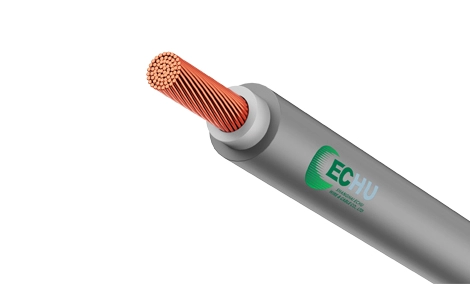

In modern industrial automation, a VFD cable is not simply a power transmission cable — it is a critical protection component between the variable frequency drive and the motor whose shielding structure, insulation material, grounding design, and jacket specification collectively determine whether the motor it serves operates reliably for its designed service life or suffers premature bearing failure, insulation degradation, and unplanned downtime from the high-frequency electrical stress that variable frequency drives generate. For procurement managers, electrical engineers, maintenance teams, and system integrators who have specified standard tray cable, THHN wire, or ordinary PVC-insulated cable for VFD-to-motor connections, the consequences of that decision may not be immediately visible — but they accumulate with every switching cycle of the drive, gradually damaging motor bearings through common mode current discharge until the motor fails at the worst possible moment in the production schedule.
The selection of the right VFD cable — and the evaluation of VFD cable manufacturers who can provide the shielding structure, insulation quality, grounding design, and technical documentation that industrial motor protection requires — is the engineering and procurement decision that determines whether a VFD-driven motor system delivers the energy efficiency, speed control, and process flexibility that variable frequency drives promise, or whether it delivers a recurring cycle of motor bearing failures, emergency maintenance, production stoppages, and replacement costs that erode the economic case for VFD investment. For factories, OEM equipment builders, automation integrators, and maintenance departments managing VFD-driven pump, fan, conveyor, HVAC, and process systems, understanding why standard tray cable is inadequate for VFD output applications — and what a dedicated VFD cable provides that standard cable cannot — is the technical knowledge that protects expensive motor assets and reduces total cost of ownership.
This guide covers the complete picture for industrial buyers: why the wrong cable can destroy motor bearings, what a VFD cable is and how it differs from standard tray cable, how common mode current causes motor bearing failure and how cable design manages this risk, how to evaluate VFD cable components for shielding, insulation, and grounding performance, and what installation and maintenance practices protect VFD cable and motor system reliability through the equipment's service life.
The commercial and technical case for investing in dedicated VFD cable starts with a clear understanding of the specific electrical stress mechanisms that variable frequency drives create — and why standard tray cable, THHN wire, and ordinary PVC-insulated cable are not designed to manage these mechanisms in ways that protect motor bearings and system reliability.
High-frequency voltage switching is the fundamental electrical characteristic of variable frequency drives that creates the stress conditions standard cable cannot manage. A VFD controls motor speed by rapidly switching DC bus voltage through power electronics — creating high-frequency voltage pulses with rise times measured in microseconds. These fast-switching pulses generate high-frequency electrical noise, voltage spikes, and common mode currents that travel through the cable and motor system in ways that standard power cable was never designed to handle.
Common mode current is the high-frequency current that most directly threatens motor bearing integrity in VFD systems. Unlike differential mode current that flows through the phase conductors in a balanced pattern, common mode current flows through all conductors simultaneously and returns through unintended paths — including the cable shield, grounding system, motor frame, motor shaft, and motor bearings. When common mode current discharges through the motor bearing, it creates microscopic electrical erosion of the bearing raceway surface — a damage mechanism called electrical discharge machining that produces the characteristic pitting and fluting patterns that indicate bearing damage from VFD operation.
Reflected wave voltage spikes are the insulation stress mechanism that most directly threatens cable and motor winding integrity in long cable run applications. When the VFD's fast-switching voltage pulses travel along the cable and encounter the impedance mismatch at the motor terminals, a portion of the pulse reflects back toward the drive — creating voltage spikes at the motor terminals that can reach twice the DC bus voltage. For standard PVC-insulated cable with lower voltage stress resistance, these reflected wave spikes accelerate insulation degradation and can eventually cause insulation failure in the motor windings.
For industrial operations, motor bearing failure is not simply a repair cost — it is a production disruption event that creates emergency maintenance labor, spare motor procurement cost, production downtime, missed delivery schedules, and safety risks that collectively far exceed the cost difference between standard tray cable and dedicated VFD cable. A single unplanned motor failure on a critical production line can create downtime costs that exceed the cost of properly cabling the entire VFD system — making the investment in dedicated VFD cable one of the highest-ROI decisions in industrial electrical system design.
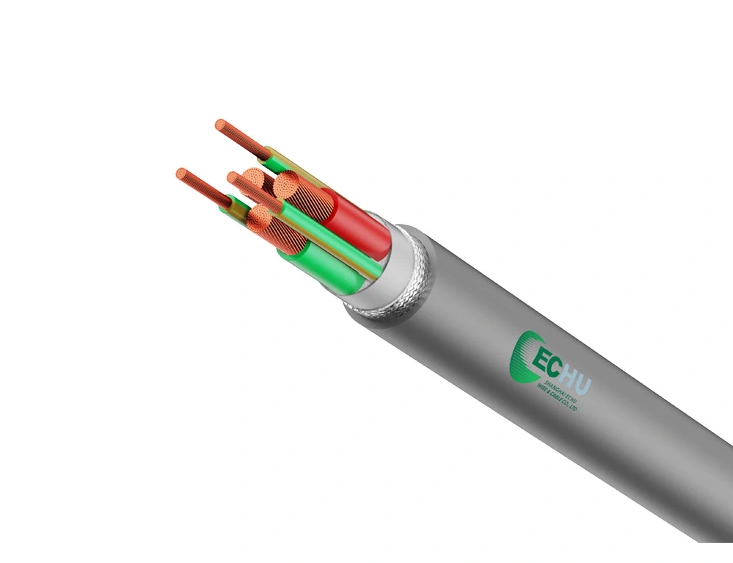
Understanding what a VFD cable is — and how its shielding structure, insulation material, grounding design, and jacket specification differ from standard tray cable in the specific ways that determine motor bearing protection and system reliability — is essential for engineers and procurement teams evaluating cable specifications for VFD-to-motor applications.
A VFD cable is a specially designed cable used to connect a variable frequency drive to an AC motor — engineered to handle the high-frequency switching, voltage spikes, EMI, and common mode noise generated by VFD systems in ways that standard tray cable, THHN wire, and ordinary PVC-insulated cable cannot. A VFD cable is not a premium version of ordinary cable — it is a purpose-built component designed to manage the electrical side effects of variable frequency drives that would otherwise damage motor bearings, degrade insulation, and create electromagnetic interference with nearby control and signal systems.
| Performance Factor | Standard Tray Cable / THHN / PVC Cable | Dedicated VFD Cable |
|---|---|---|
| Designed for VFD output | No — general-purpose power cable | Yes — purpose-built for drive-to-motor connection |
| Shielding | Limited or none | Copper tape, braid, foil, or composite shield |
| EMI control | Weak — no controlled noise path | Strong — shield provides controlled high-frequency current return |
| Common mode current control | Limited — no designed return path | Better controlled through shield and grounding design |
| Insulation stress resistance | Lower — standard voltage rating | Higher — designed for voltage spikes and high-frequency stress |
| Reflected wave protection | Limited | Better suited for long motor lead applications |
| Bearing protection support | Poor — no controlled noise path | Better support when properly grounded and terminated |
| Industrial environment resistance | General-purpose | Designed for oil, abrasion, heat, and mechanical stress |
The technical mechanism by which common mode current generated by variable frequency drives travels through the motor shaft and discharges across motor bearings — and how dedicated VFD cable shielding and grounding design manages this risk — is the core engineering knowledge that allows electrical engineers and procurement managers to understand why cable selection is a motor protection decision, not simply a wiring specification.
The typical bearing damage process in a VFD system with inadequate cable follows a predictable progression:
The VFD creates high-frequency voltage pulses through rapid power electronics switching
These pulses generate common mode voltage that appears on the motor shaft relative to ground
Electrical charge builds across the thin lubricant film in the motor bearing
When the charge exceeds the dielectric strength of the lubricant film, discharge occurs through the bearing
Each discharge event creates microscopic pits on the bearing raceway surface through electrical discharge machining
Repeated discharge events create the characteristic fluting pattern — parallel grooves across the bearing raceway
Fluting increases bearing noise, vibration, and heat generation
The motor fails prematurely — often within months rather than years of VFD installation
A dedicated VFD cable helps manage common mode current risk by providing a controlled, low-impedance return path for high-frequency noise current through the cable shield — reducing the proportion of common mode current that travels through unintended paths including the motor shaft and bearings. The effectiveness of this protection depends on the shield coverage, the shield termination method, and the grounding design — which is why proper installation is as important as cable selection for motor bearing protection.
Even the best VFD cable provides limited bearing protection if installed incorrectly. The most important installation practices for VFD cable grounding include: using 360-degree shield termination at both the drive and motor ends where possible, maintaining low-impedance grounding connections, avoiding long pigtail shield connections that increase high-frequency impedance, bonding the motor frame and drive cabinet properly, keeping VFD output cables separated from sensitive signal and communication cables, and following the drive manufacturer's installation instructions for motor lead length and filtering requirements.
The systematic evaluation of VFD cable components — shielding structure, insulation material, grounding design, and jacket specification — against the requirements of the specific VFD application is the technical procurement knowledge that allows engineers to specify the right cable for motor protection and system reliability.
| Shield Type | EMI Control | Flexibility | Best Application |
|---|---|---|---|
| Copper tape shield | Strong coverage, good EMI control | Less flexible in some designs | Fixed installation, industrial conduit runs |
| Copper braid shield | Flexible and durable | Good — coverage depends on braid density | Flexible machine connections, drag chain applications |
| Foil shield | Good high-frequency coverage | Requires drain wire and careful installation | High-frequency noise control in sensitive environments |
| Foil plus braid composite shield | Strong EMI protection and flexibility | Higher cable cost | Demanding industrial VFD applications |
| Insulation Type | VFD Suitability | Typical Application |
|---|---|---|
| Standard PVC | Limited — lower voltage stress resistance | General wiring — not recommended for VFD output |
| THHN | Not ideal — building wire specification | Building wiring — not designed for VFD switching stress |
| XLPE | Better electrical and thermal performance | Commonly preferred for VFD cable insulation |
| Special VFD-grade insulation | Strongest — designed for voltage spikes and high-frequency stress | Industrial VFD systems with demanding performance requirements |
| Application Scenario | Recommended Cable | Reason |
|---|---|---|
| VFD-to-motor connection | Dedicated shielded VFD cable | Controls EMI, voltage stress, and common mode current |
| Long motor lead length | Shielded VFD cable with XLPE insulation | Manages reflected waves and insulation stress |
| Sensitive automation environment | Shielded VFD cable | Reduces interference with PLCs and sensors |
| Harsh industrial plant | Industrial VFD cable with oil-resistant jacket | Better jacket, shielding, and mechanical protection |
| OEM machinery | Custom VFD cable solution | Supports compact routing and repeatable performance |
| Standard power distribution | Standard tray cable | Suitable where VFD output stress is not present |
Dedicated VFD cable delivers the most motor protection value for: manufacturing plants where VFD-driven conveyor, pump, and fan systems run continuously and motor failure creates production stoppages, water treatment facilities where VFD-driven pump motors operate in demanding environments with limited maintenance access, HVAC systems where VFD-driven fan and pump motors must operate reliably for years without bearing replacement, food and beverage production where motor failure creates hygiene risks and production downtime, chemical processing where motor replacement in hazardous areas creates safety and compliance challenges, and OEM machine builders where motor reliability directly affects the machine's warranty performance and customer satisfaction.

Procuring the right VFD cable for a specific industrial motor application requires systematic pre-order confirmation of electrical requirements, environmental conditions, shielding specifications, and installation requirements — and a maintenance program that protects VFD cable and motor system performance through the equipment's service life.
Before requesting a quotation from VFD cable manufacturers, prepare and confirm the following:
Confirm the motor power rating and drive output voltage — and verify that the selected cable's voltage rating provides adequate margin above the maximum drive output voltage including reflected wave spikes
Confirm the cable run length — and verify that the selected cable's shielding and insulation specification is appropriate for the motor lead length, considering reflected wave risk at longer distances
Confirm the installation method — tray, conduit, drag chain, or open air — and verify that the selected cable's flexibility, jacket material, and mechanical protection are appropriate for the installation environment
Confirm the environmental conditions — ambient temperature, oil exposure, moisture, abrasion, chemical exposure, and UV exposure — and verify that the selected cable's jacket material provides adequate resistance to the specific environmental stresses present
Confirm the shielding structure requirement — copper tape, braid, foil, or composite — based on the EMI sensitivity of the nearby control and signal systems and the common mode current management requirements of the application
Confirm the grounding design requirement — symmetrical grounding, dedicated ground conductors, or other — and verify that the selected cable's grounding structure supports the installation's grounding and bonding plan
Confirm the certification and documentation requirements — UL listing, CE marking, or other standards — and verify that the selected cable meets the applicable standards for the installation location and application
Confirm the flexibility requirement — for machine movement, drag chain, or robotic applications — and verify that the selected cable's construction provides adequate flex life for the expected number of movement cycles
Inspect cable jackets regularly for cuts, abrasion, oil swelling, or cracking — jacket damage exposes the shield and insulation to environmental attack that accelerates degradation
Check shield termination during maintenance — verify that the shield is properly terminated at both ends and that the termination connections are tight and corrosion-free
Confirm grounding continuity — verify that the grounding path from the motor frame through the cable shield to the drive cabinet is continuous and low-impedance
Keep VFD output cables separated from signal and communication cables — maintaining physical separation reduces the risk of EMI coupling from the VFD cable to sensitive control circuits
Monitor motor bearing condition during preventive maintenance — checking bearing noise, vibration, and temperature provides early warning of bearing damage before catastrophic failure occurs
Follow drive manufacturer guidelines for motor lead length and filtering — when cable runs exceed the drive manufacturer's recommended maximum motor lead length, dV/dt filters or sine wave filters may be required to protect motor insulation
In industrial automation, the decision to use standard tray cable instead of dedicated VFD cable for drive-to-motor connections is a false economy that trades a small upfront cost saving for a significantly higher risk of motor bearing failure, production downtime, emergency maintenance, and motor replacement costs that accumulate over the operating life of the VFD system. A dedicated VFD cable — with the right shielding structure, insulation material, grounding design, and jacket specification for the specific application — is not a premium option for demanding applications. It is the correct engineering specification for any VFD-to-motor connection where motor reliability, production continuity, and total cost of ownership matter.
ECHU Wire and Cable supports industrial cable solutions for automation, machinery, drive systems, control systems, and demanding manufacturing environments — helping buyers source reliable VFD cable from experienced VFD cable manufacturers with the technical knowledge, product range, and quality documentation that industrial motor protection requires.
Contact ECHU Wire and Cable today to discuss your VFD application, motor rating, voltage, cable run length, shielding requirement, grounding design, installation environment, and bulk procurement needs. ECHU can help evaluate the right VFD cable specification for your industrial motor protection requirements and provide the technical support and supply reliability that demanding industrial electrical procurement requires.
Q1: What is a VFD cable and why is it different from standard tray cable?
A VFD cable is a specially designed cable used to connect a variable frequency drive to an AC motor — engineered to handle the high-frequency switching, voltage spikes, EMI, and common mode noise that VFD systems generate. Unlike standard tray cable or THHN wire, a VFD cable uses stronger insulation designed for voltage spike stress, shielding that provides a controlled return path for high-frequency noise current, and grounding structures that reduce common mode current in unintended paths including the motor shaft and bearings.
Q2: Can using standard tray cable instead of VFD cable cause motor bearing failure?
Yes. In VFD systems, common mode current generated by the drive's high-frequency switching can travel through the motor shaft and discharge across the motor bearings when the cable does not provide a controlled, low-impedance return path for this current. Repeated bearing discharge creates microscopic pitting and fluting on the bearing raceway surface — progressively increasing bearing noise, vibration, and heat until the motor fails prematurely. Dedicated VFD cable with proper shielding and grounding helps manage this risk by providing a controlled path for high-frequency noise current.
Q3: What shielding structure is best for VFD cable in industrial applications?
The best shielding structure depends on the specific application requirements. Copper tape shield provides strong coverage and good EMI control for fixed installation in conduit or tray. Copper braid shield provides flexibility and durability for machine connections and drag chain applications. Foil plus braid composite shield provides the strongest combination of EMI protection and flexibility for demanding industrial VFD applications where both high-frequency noise control and cable flexibility are required.
Q4: Why is grounding and shield termination as important as cable selection for motor bearing protection?
Even the best VFD cable provides limited bearing protection if the shield is not properly terminated and grounded. The shield's effectiveness in providing a controlled return path for common mode current depends on the shield termination method — 360-degree termination at both ends provides the lowest impedance path — and the quality of the grounding connections between the motor frame, cable shield, and drive cabinet. Long pigtail shield connections, poor bonding, and high-impedance grounding paths reduce the shield's effectiveness and allow more common mode current to travel through unintended paths including the motor bearing.
Q5: How do I choose reliable VFD cable manufacturers for industrial procurement?
Choose VFD cable manufacturers that can provide proper cable structure recommendations for the specific drive, motor, cable length, and installation environment; shielding options including copper tape, braid, foil, and composite designs; insulation materials appropriate for VFD output voltage stress including XLPE and special VFD-grade insulation; industrial jacket materials with oil resistance, abrasion resistance, and flame retardancy appropriate for the installation environment; technical documentation including voltage ratings, shielding specifications, and installation guidelines; quality control and certification documentation; and responsive technical support for application-specific questions about cable selection, grounding design, and installation requirements.



 English
 ไทย
ไทย tiếng việt
 हिंदी
हिंदी Jawa
Jawa