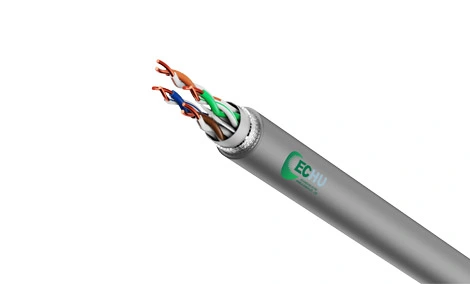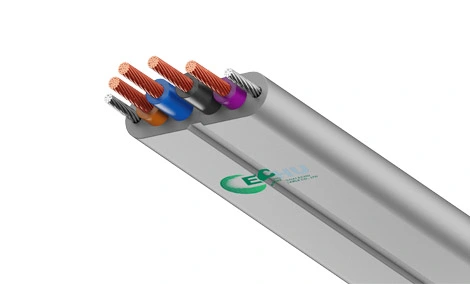

Every elevator trip puts the traveling cable through another cycle of movement. As the car rises and falls, the cable bends, hangs under its own weight, changes position, and responds to acceleration and deceleration. Over time, these repeated mechanical loads can affect conductors, insulation, reinforcement elements, and the outer jacket. Cable life therefore depends less on one headline specification than on how well the cable design, installation, and operating conditions work together.
An elevator flat traveling cable is designed specifically for this kind of repeated vertical movement, but that does not mean every installation will achieve the same service life. Bend radius, conductor stranding, suspension length, cable weight, shaft conditions, and installation quality all influence how the cable ages. Choosing the right traveling cable for elevator applications means looking at the complete operating environment rather than simply matching voltage and number of cores.
Repeated flexing is one of the main mechanical stresses acting on a traveling cable. During elevator operation, the cable continually changes shape as the car moves through the shaft. Each movement places small amounts of stress on the conductors and surrounding materials. When the cable is properly designed and installed, these stresses are distributed through the structure. When the cable is poorly matched to the application, stress can become concentrated in particular areas and accelerate fatigue.
The number of elevator starts alone does not determine cable life. The way the cable bends is just as important. A smooth, controlled bend places different demands on the cable from sharp bending, twisting, or repeated side-to-side movement. Acceleration, travel speed, hanging length, and the position of the cable loop can also change the mechanical load during every trip.
Conductor design plays an important role here. Flexible conductors made from multiple fine strands can accommodate repeated movement more effectively than a conductor structure intended primarily for fixed installation. However, conductor flexibility must be considered together with insulation, jacket design, and the overall geometry of the elevator flat traveling cable. A flexible conductor inside a poorly balanced cable structure will not by itself guarantee long service life.
For maintenance teams, changes in cable movement can provide an early warning. A cable that begins to twist, swing differently, form an irregular loop, or pull unevenly deserves attention even if there is no visible electrical fault yet. Mechanical behaviour often changes before a complete failure occurs.
.jpg "/uploads/image/2026/08/26/flat-travelling-cable(1).jpg")
Bend radius has a direct influence on how much strain is placed on the internal cable structure. When a cable is bent too tightly, conductors on the outside of the curve are stretched while materials on the inside are compressed. Repeating that condition over many elevator trips can increase fatigue.
There is no single minimum bend radius that can safely be applied to every traveling cable for elevator installations. Cable dimensions, internal construction, reinforcement, conductor layout, and the manufacturer's design all matter. The correct value should therefore come from the technical data for the specific cable being installed.
Installation position is equally important. A flat traveling cable is intended to hang and flex in a controlled plane. If it is installed with an unintended twist, forced sideways by nearby equipment, or allowed to contact shaft components during travel, the cable can experience mechanical loading that was not considered in its design.
Enough clearance should be maintained around the hanging loop throughout the complete elevator travel. The cable should not repeatedly rub against guide rails, brackets, walls, or other components. Even light contact can become significant when it happens thousands of times during normal operation.
It is also important to look at where the moving section transitions into a fixed section. Termination and suspension points can become high-stress areas if cable weight or movement is transferred directly to the conductors. Correct supporting hardware helps separate mechanical load from the electrical terminations.
| Factor | How It Can Shorten Cable Life | Better Practice |
|---|---|---|
| Repeated flexing | Concentrated bending can increase conductor and insulation fatigue | Use a cable designed for continuous elevator movement and maintain controlled flexing |
| Too-small bend radius | Places excessive tension and compression on internal components | Follow the bend-radius requirement for the specific cable |
| Twisted installation | Creates uneven mechanical stress during travel | Allow the cable to hang naturally before final positioning |
| Excessive hanging load | Transfers unnecessary tensile stress into the cable structure | Use appropriate reinforcement and suspension arrangements |
| Shaft contact or abrasion | Gradually damages the outer jacket | Maintain clearance throughout the elevator travel path |
| Poor termination support | Places cable weight or movement force on electrical connections | Use suitable strain relief and mechanical support |
The internal construction of a traveling cable determines how mechanical forces are shared as the elevator moves. This begins with the conductors. Fine-stranded copper conductors are commonly used where repeated flexibility is required because the individual strands can move slightly relative to one another as the cable bends.
Stranding alone, however, is only part of the design. The conductors must be positioned so that the cable bends predictably without excessive internal movement. Insulation thickness, conductor spacing, reinforcement elements, shielding, communication components, and jacket construction all influence the mechanical balance of the cable.
This becomes particularly important as more functions are integrated into one cable. A modern elevator flat traveling cable may carry power, control, communication, monitoring, or video circuits. These elements do not necessarily have the same dimensions or mechanical behaviour, so the internal arrangement needs to keep the cable stable while it travels.
Some installations also require additional tensile support. Reinforcing elements, such as steel wire incorporated into suitable cable designs, can help carry mechanical loads that would otherwise be transferred to the electrical conductors. The need for reinforcement depends on the cable construction, suspended length, cable weight, and elevator arrangement; it should not be added or omitted simply as a general rule.
Shielding introduces another design consideration. Where communication or signal circuits need protection from electromagnetic interference, a shielded construction may be appropriate. But shielding must remain flexible enough for the intended movement and should be integrated without making the cable mechanically unbalanced.
ECHU's elevator cable range reflects these different requirements, with flat constructions available for standard traveling applications as well as options incorporating reinforcement, shielding, and communication elements. When comparing a traveling cable for elevator systems, these structural differences are often more useful than comparing cable dimensions alone.
The outer jacket is the first line of mechanical protection for the cable. It has to remain flexible while protecting the internal structure from abrasion, contamination, and the surrounding shaft environment.
PVC is widely used for elevator traveling cable jackets because it can provide a practical balance of flexibility, durability, insulation performance, and cost for many installations. Other project requirements may place greater emphasis on smoke and halogen performance, temperature resistance, or specific environmental properties.
The condition inside the elevator shaft should be considered before the jacket material is finalised. Oil contamination, dust, construction debris, moisture, temperature variation, and contact with rough surfaces can all affect the cable over time. A material that is suitable in a clean indoor shaft may not respond in the same way in a more demanding environment.
Abrasion is particularly easy to underestimate. The cable should normally move without rubbing against surrounding structures, so visible wear may indicate a routing or alignment problem rather than simply inadequate jacket strength. Replacing the cable without correcting the source of contact can lead to the same damage appearing again.
Jacket inspection can also reveal problems elsewhere in the system. Localised flattening may indicate excessive clamping, polished wear marks can show repeated rubbing, and twisting patterns may point to incorrect installation or unstable cable movement. Reading these signs as part of the complete mechanical system is more useful than treating each mark as an isolated defect.
Projects with different safety or environmental requirements may also need different insulation and sheath constructions. ECHU's range of elevator and industrial cables includes different traveling cable configurations, allowing the cable structure to be compared against the actual electrical, mechanical, and installation requirements rather than selecting solely by core count.
A longer hanging cable creates more suspended weight. That weight has to be controlled by the cable structure and its supporting system while the elevator is moving. As travel height increases, mechanical loading can therefore become a more important part of cable selection.
This does not mean that a particular suspended length automatically requires one specific cable type. Cable weight per unit length, reinforcement design, fixing method, elevator geometry, and operating conditions all influence the final arrangement. The cable manufacturer and elevator system designer should consider these factors together.
Operating conditions also change the mechanical demands. A lightly used elevator in a low-rise building does not place the same duty on its traveling system as equipment running frequent cycles throughout the day. Higher travel speeds and stronger acceleration or deceleration can create additional dynamic movement, making stable hanging behaviour increasingly important.
The number and type of circuits can also affect total cable weight. Adding power conductors, shielded pairs, communication lines, or other elements changes both the mass and internal balance of the cable. In such cases, simply replacing an existing cable with a larger elevator flat traveling cable without reviewing the suspension system may not be the best approach.
When specifying a replacement, it is useful to provide more than the original cable code. Elevator travel height, free hanging length, operating speed, suspension method, required circuits, installation position, and any recurring damage pattern can all help identify whether the previous cable was correctly matched to the application.
Installation has a major influence on the service life of a traveling cable for elevator systems. A well-designed cable can still develop premature problems if torsion is introduced during unpacking, the hanging loop is poorly positioned, or suspension hardware places uneven pressure on the jacket.
Before final fixing, the cable should be allowed to hang in its natural orientation wherever the installation procedure permits. This helps reveal unwanted twist and allows the moving section to settle into a stable position. The cable should not be forced into alignment if it naturally tries to rotate in another direction.
Clamps and suspension devices should hold the cable securely without crushing it. Mechanical support should carry the intended hanging load so that conductor terminations are not used as structural support. Adequate clearance should also be confirmed over the full travel of the elevator rather than only when the car is at one floor.
Once the elevator is in service, inspection should focus on both appearance and movement. Cuts and cracks matter, but so do changes in loop shape, unusual swinging, twisting, uneven movement, or localised jacket wear. These signs can indicate that the cable or its suspension arrangement is no longer operating as intended.
There is no universal replacement interval for every elevator traveling cable. Service conditions differ too widely. Inspection and replacement decisions should reflect the elevator manufacturer's requirements, cable condition, operating duty, applicable maintenance procedures, and findings from qualified service personnel.
When recurring wear, unusual movement, or premature cable replacement becomes a pattern, the most useful next step is often to review the application rather than ordering the same construction again. Details such as suspended length, movement conditions, conductor requirements, reinforcement, shielding, and shaft environment can help identify whether a different cable configuration is appropriate. For application-specific requirements, buyers can discuss the elevator cable configuration with ECHU before finalising the replacement specification.
The service life of an elevator traveling cable is shaped by the interaction between cable design and the way the elevator operates. Repeated flexing creates unavoidable fatigue, but excessive bending, torsion, poor suspension, abrasion, or unsuitable internal construction can concentrate that stress and accelerate wear.
A reliable elevator flat traveling cable therefore needs more than adequate electrical capacity. Conductor flexibility, internal balance, reinforcement, jacket properties, suspended weight, bend behaviour, and installation position all influence how consistently the cable moves over time.
Good installation and maintenance complete the picture. Keeping the cable free from unnecessary twist, supporting its weight correctly, maintaining clearance, and watching for changes in movement can help identify developing problems before they turn into failures. When selecting a traveling cable for elevator systems, the best result comes from matching the cable to the real elevator configuration rather than relying on a generic service-life expectation.
There is no universal service-life figure. Cable life depends on elevator duty, bending conditions, hanging length, cable construction, environment, installation quality, and maintenance. Condition-based inspection is more useful than relying on one fixed replacement age.
Common causes include excessive bending, twisting, abrasion, poor suspension, unsuitable cable construction, excessive mechanical load, and damage at termination points. Abnormal cable movement can also accelerate fatigue.
A bend that is too tight increases tension and compression within the cable. Repeating this stress during elevator operation can accelerate fatigue in conductors, insulation, shielding, and other internal components.
Not automatically, but longer suspended lengths can increase hanging weight and tensile load. Cable weight, travel height, suspension design, and the cable manufacturer's recommendations should be reviewed to determine whether reinforcement is needed.
Look for abrasion, cracking, flattening, exposed internal elements, unusual twisting, changes in loop shape, excessive swinging, or contact with shaft components. Changes in movement can be important even before visible electrical failure occurs.
Useful information includes system voltage, conductor sizes, number and type of circuits, travel height, suspended length, elevator speed, cable mounting method, communication or shielding needs, operating environment, and any known wear problems with the existing cable.


 English
 ไทย
ไทย tiếng việt
 हिंदी
हिंदी Jawa
Jawa